
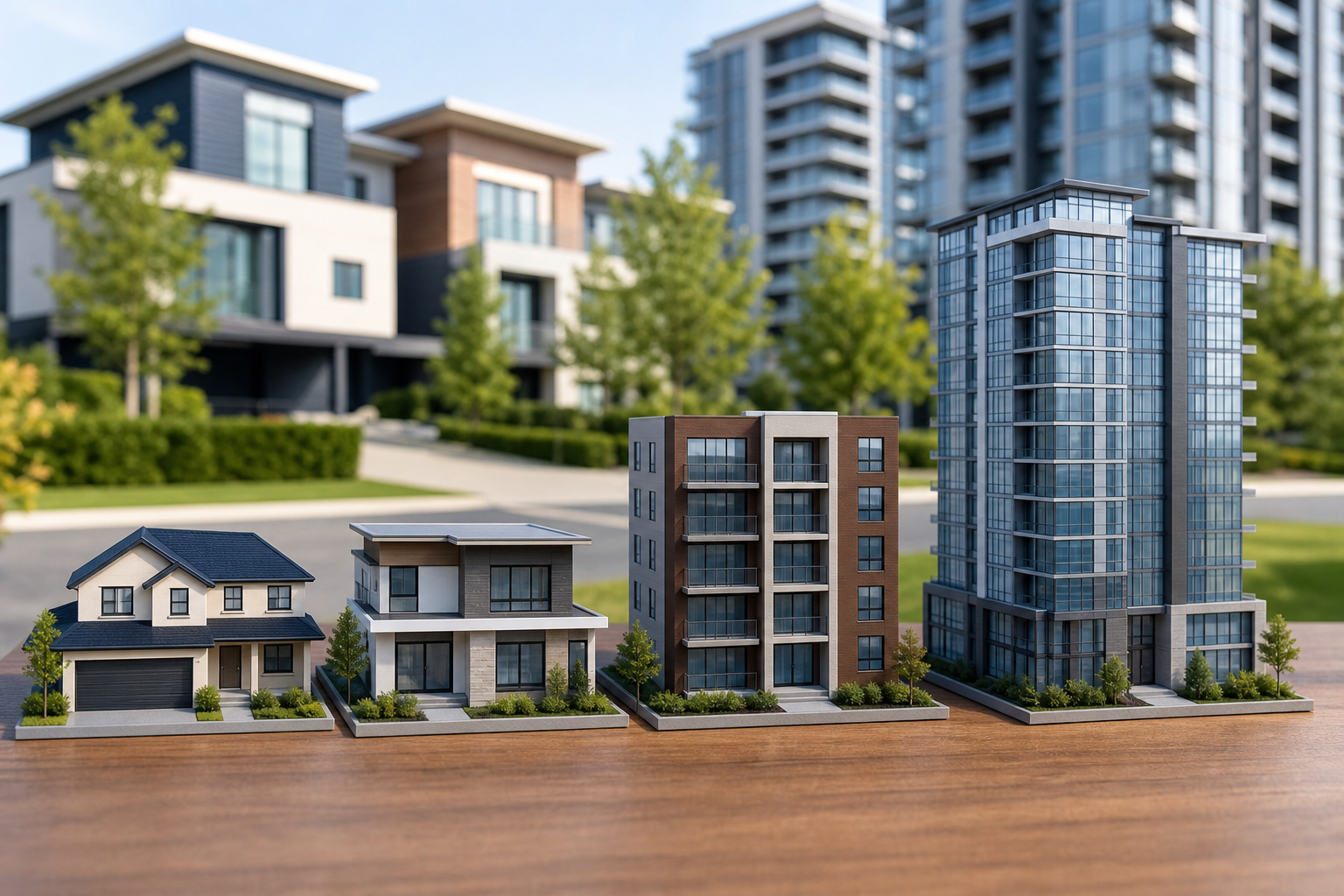
Choosing a property type is one of the most consequential decisions you’ll make on the path to buying a home. Beyond the look and feel, the choice influences your day-to-day lifestyle, maintenance responsibilities, monthly costs, privacy, and even your flexibility to adapt as life changes. This guide offers a practical, step-by-step framework you can apply to compare options side by side and reach a confident decision based on your priorities—not pressure or assumptions.
Start with your living priorities
Before comparing property types, get clear on what you need your next home to do for you. A short, honest list will keep you focused as you evaluate tradeoffs.
- Daily rhythm: How do you actually live? Quiet mornings on a balcony, room for a home office, space to cook, or easy lock-and-leave simplicity?
- Household size: How many people (and pets) will use the space now and within the next 3–5 years?
- Maintenance appetite: Do you enjoy projects and yard work, prefer minimal upkeep, or want professional building services?
- Privacy and noise tolerance: Are shared walls fine, or do you want full separation?
- Parking and storage: Do you need a private garage, secure bike storage, or extra space for seasonal gear?
- Outdoor access: Is a private yard, patio, or nearby green space essential, nice-to-have, or not important?
- Accessibility: Any mobility, entry, or elevator needs to consider now or in the future?
Rank each item must-have, nice-to-have, or optional. Keep this list in front of you as you compare property types so you can measure fit, not just features.
Understand common property types
Each property type comes with typical patterns of space, maintenance, and governance. Use the summaries below to anticipate what life might look like day to day.
- Detached house: Standalone structure on its own lot. Typically maximizes privacy, interior space, and yard access. You’re responsible for exterior upkeep and most repairs.
- Semi-detached/duplex: Two homes sharing one wall. Offers many single-family benefits with some efficiency of shared structure. Noise and privacy vary by build quality and layout.
- Townhome/rowhome: Multi-level homes sharing side walls. Often include a small yard or patio and direct entry from the street or garage. Owners usually handle interior maintenance; exterior may be covered by a community or strata/association, depending on the setup.
- Condominium (apartment-style): Single-level or multi-level units within a larger building. Typically emphasize convenience, shared amenities, and professional building maintenance, with owners responsible for interior upkeep.
- Low-rise vs. high-rise condos: Low-rise may offer fewer units per floor and easier stair access; high-rise can provide views, elevators, and more amenities. Elevator reliance and shared spaces are broader in high-rise settings.
- Multi-unit property (duplex/triplex/fourplex as one purchase): One buyer owns multiple self-contained units. This can offer flexibility for multi-generational living or space separation under one roof. Maintenance complexity and planning are greater.
These patterns are general. Always verify what each specific property includes and what responsibilities belong to the owner versus any building or community organization.
Budget and total cost of ownership
Your purchase price is just one part of affordability. Total cost of ownership (TCO) helps you compare property types fairly by including recurring and variable costs.
Build a simple TCO worksheet for each shortlisted property:
- Monthly carrying costs: Mortgage payment, insurance, and any recurring community or building fees if applicable.
- Utilities: Heating, cooling, electricity, water, and internet. Different building types and layouts influence consumption.
- Maintenance and repairs: Plan for routine upkeep (filters, caulking, servicing) and set aside a buffer for unexpected repairs. Freestanding homes usually require a larger personal reserve for exterior items.
- Appliance and system lifecycle: Estimate replacement horizons for HVAC, roof, windows, hot water, and major appliances.
- Parking, storage, and moving costs: Factor any separate parking fees, storage lockers, or elevator bookings, as applicable.
Compare your TCO across 3, 5, and 10 years to see how different property types might align with your financial comfort over time.
Location and lifestyle fit
Property type and location interact in meaningful ways. The same square footage can feel very different depending on the surrounding environment and building style.
- Proximity to essentials: Consider your most frequent destinations and how easily you can reach them.
- Transportation habits: If you rely on transit, check the practicality of your likely routes. If you drive, assess typical parking and access patterns you prefer.
- Noise and activity level: Multi-unit buildings and denser areas may carry more ambient noise than quiet streets of detached homes.
- Green space and recreation: If you value outdoor time, prioritize nearby parks, trails, or on-site outdoor areas to supplement smaller private spaces.
- Community character: Some buildings emphasize quiet living; others host more activity and amenities. Decide what suits your routine.
Visit at different times of day, walk the immediate area, and note what you see and hear. This “lived experience” check is one of the best ways to test property-type fit with your daily life.
Space, layout, and future-proofing
Square footage is only part of the story. Layout determines how usable the space feels and whether it can flex with your life.
- Zoning your day: Can you separate quiet activities (sleep, focus) from louder ones (cooking, workouts)?
- Ceiling height and light: Higher ceilings and good natural light can make smaller spaces feel more expansive.
- Storage logic: Look for well-placed closets, pantry space, and smart nooks for gear. In condos, confirm locker size and accessibility if available.
- Room sizes that match furniture: Measure key pieces you plan to keep—desks, sofas, dining tables, and beds—to ensure they fit.
- Outdoor extensions: Balconies, patios, or yards can add meaningful living space if you use them regularly.
- Future changes: Consider potential household additions, evolving work-from-home patterns, or accessibility needs. Will the property type flex to accommodate them?
Governance, rules, and responsibilities
Many property types involve shared responsibilities or community rules. Understand these early to avoid surprises.
- Shared structures and systems: In townhomes and condos, confirm what the building or community typically maintains versus what you handle.
- Rules and restrictions: Some communities have guidelines affecting renovations, short-term use, pets, noise, or exterior appearance.
- Decision-making processes: Multi-unit buildings and communities often rely on collective decisions for major projects and budgets. Consider your comfort with that model.
Request and review any available documents that describe responsibilities and rules. If you need professional guidance to interpret documents or obligations, consult an appropriate qualified professional. This guide is for general educational purposes and does not provide legal, financial, or technical advice.
Maintenance spectrum and time tradeoffs
Think of maintenance as a spectrum from “hands-on” to “hands-off,” and decide where you want to be.
- Hands-on end: Detached houses and some duplexes typically mean you or your hired trades manage exterior and interior upkeep.
- Shared-responsibility middle: Townhomes often split responsibilities—verify specifics for roofs, siding, and common areas where applicable.
- Hands-off end: Condos centralize many exterior and building systems. Owners usually focus on interiors while building management addresses common elements.
Ask yourself whether you want to spend weekends tuning a garden, maintaining systems, or keeping things as low-effort as possible. There’s no right answer—only the right fit for you.
The Needs–Options–Fit matrix
Use this quick matrix to align property types with your top priorities. Score each item from 1 (poor) to 5 (excellent) for each property you’re considering. Add notes to capture nuances you observe during showings.
- Privacy and noise control
- Outdoor access and pets
- Maintenance workload
- Total cost of ownership (3–10 year view)
- Storage and functional layout
- Accessibility and aging-in-place
- Location convenience for your routine
- Governance comfort (rules, shared decisions)
Compare totals across options, then look beyond the number to the notes. A lower-scoring property can still win if it solves your must-haves uniquely well.
Due diligence and tie-breakers
When two options feel close, structured checks can break the tie.
- Visit at off-peak hours: Experience the building or street in the evening or early morning.
- Sound and light check: Stand quietly in rooms; note mechanical noise, hallway sounds, and light levels through the day.
- Circulation test: Walk from entry to kitchen, to bedrooms, and storage. Clumsy circulation often reveals itself on a second visit.
- Maintenance snapshots: Look for consistent care in common areas, exterior finishes, and mechanical rooms where access is permitted.
- Contingency comfort: Estimate a prudent reserve for maintenance based on the property type and age.
- Document review: If community or building documents are available, read for responsibilities and any notable projects or rules. Seek qualified professional advice if you need help interpreting them.
Example profiles to clarify fit
Use these illustrative profiles to test your assumptions. Adjust them to match your situation.
- Lock-and-leave convenience: If travel or long work hours are routine, a condo’s centralized building maintenance and secure entry may align with your priorities for simplicity.
- Yard and tinkering: If you want a garden, workshop space, and full control over exterior choices, a detached house often fits the bill.
- Balance of space and efficiency: If you value a front door to the street, modest outdoor space, and multi-level living, consider townhomes or rowhomes.
- Flex for extended family: If you anticipate multi-generational living under one roof, explore layouts with secondary suites or multi-unit configurations where available and appropriate.
These aren’t rules—just starting points to help you compare what you value most with what each property type commonly provides.
Common pitfalls to avoid
- Chasing square footage without assessing layout usability.
- Ignoring total cost of ownership and focusing only on the purchase price.
- Underestimating maintenance time or costs for your property type.
- Overlooking storage, parking logistics, or pet needs.
- Skipping a second showing at a different time of day.
- Not reviewing available community or building documents when applicable.
Step-by-step decision checklist
- List and rank your living priorities (must-have, nice-to-have, optional).
- Shortlist two to four property types that plausibly fit those priorities.
- Build a 3–10 year total cost of ownership snapshot for each.
- Walk through at least two properties of each shortlisted type to experience the differences.
- Score options with the Needs–Options–Fit matrix and record notes.
- Revisit top contenders at different times of day to validate assumptions.
- Complete due diligence: responsibilities, rules, and any available documentation. Consult qualified professionals as needed.
- Choose the option that best satisfies your must-haves while keeping long-term costs and maintenance in your comfort zone.
FAQs
How do I decide between a condo and a townhome?
Start with your priorities for entry style, outdoor space, and maintenance. Condos typically emphasize interior convenience and shared building services. Townhomes often provide multi-level living with direct street or garage access and a small yard or patio. Compare how each format supports your daily routine, storage needs, and tolerance for shared walls.
What’s the best way to estimate ongoing costs across property types?
Create a total cost of ownership list for each option that includes monthly carrying costs, utilities, typical maintenance and repair reserves, and any recurring building or community fees where applicable. Project these costs over 3, 5, and 10 years to understand how each property type might perform within your budget.
How much weight should I give to future needs versus today’s needs?
Prioritize today’s must-haves—those needs should be met immediately. Then stress-test your top two options against plausible changes in the next 3–5 years—household size, work-from-home, accessibility, or hobbies. A property type that satisfies your current list and flexes modestly for the near future usually provides the best balance.
Are there specific documents I should review before committing?
When applicable, look for documents that explain owner responsibilities, shared elements, rules, and any planned projects. If you need help interpreting documents or financial obligations, seek advice from an appropriate qualified professional. This article is for general information and is not legal, financial, or technical advice.
What if two properties feel equal after all my comparisons?
Use tie-breakers: visit at a different time of day, test noise and light, rehearse daily routines (entry, cooking, work, rest), and compare storage and parking logistics. Small quality-of-life details often reveal a winner.
A practical next step
To discuss the options that apply to your situation, contact Woodhouse Realty and request the relevant details before moving forward.